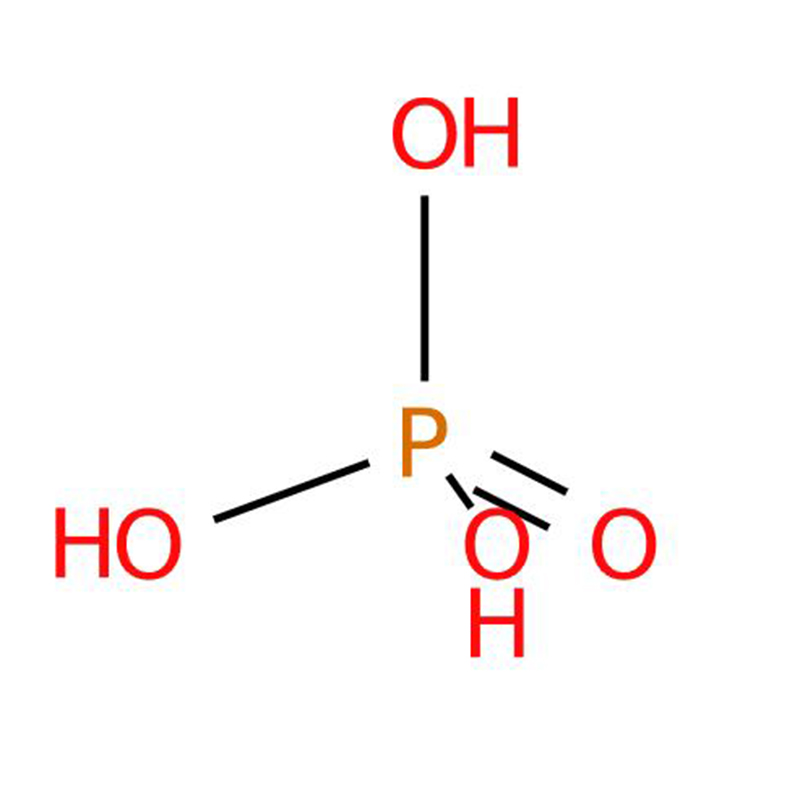
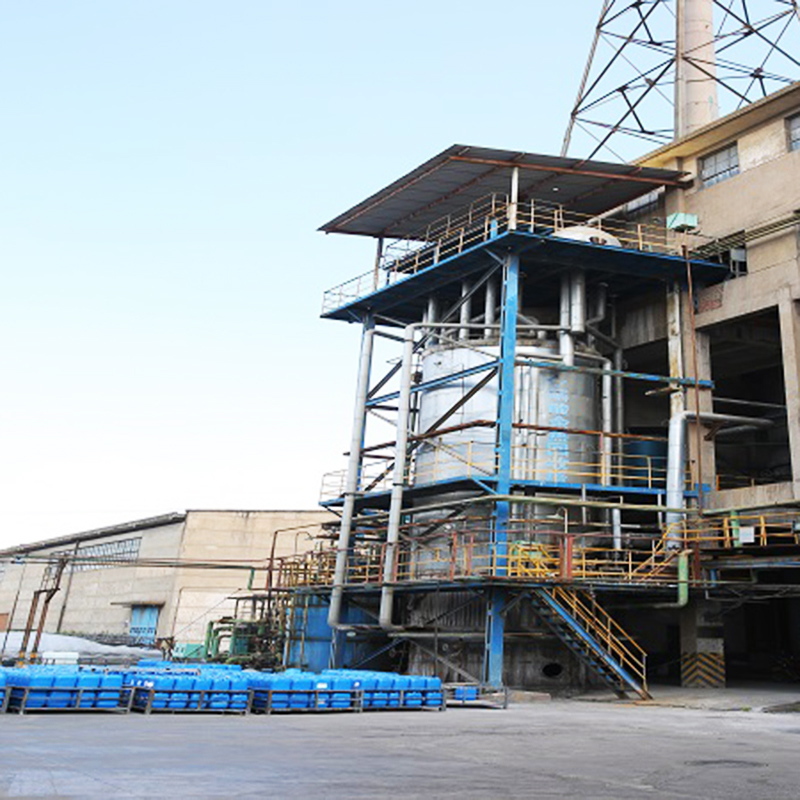
Phosphoric acid CAS#7664-38-2
Versatile Solubility & Handling:Fully miscible in water and ethanol, with unrestricted storage requirements, ensuring easy formulation and logistics.
Controlled Acidity Strength:Moderately acidic (less corrosive than HCl/H₂SO₄), suitable for applications needing pH adjustment without extreme reactivity.
Broad Industrial & Food Compliance:GRAS/FEMA 2900-certified for food/beverages (e.g., cola), and widely used in fertilizers, detergents, and metal treatment.
High-Temperature Stability:Stable up to 158°C (lit.) with high boiling point, enabling use in thermal processes like catalysis or scale removal.
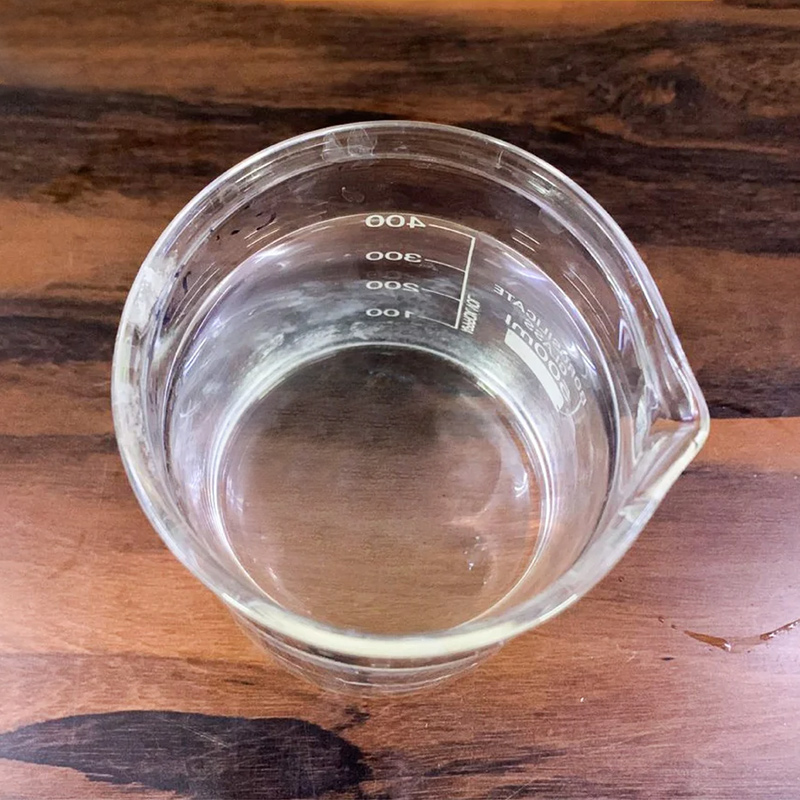
Phosphoric acid, alternatively termed orthophosphoric acid (molecular formula H3PO4), exists in pure form as either a colorless, clear, thick liquid or orthorhombic crystals, lacking odor but possessing intense sourness. The 85% concentration variant appears as a colorless or faintly tinted, syrupy liquid. With a melting point of 42.35°C and specific gravity of 1.70, this high-boiling-point acid mixes completely with water in all proportions. At its boiling point of 213°C (where it loses half a water molecule), it transforms into pyrophosphoric acid. Further heating to 300°C converts it to metaphosphoric acid. Its relative vapor density measures 1.834. This compound demonstrates ready solubility in both water and ethanol.
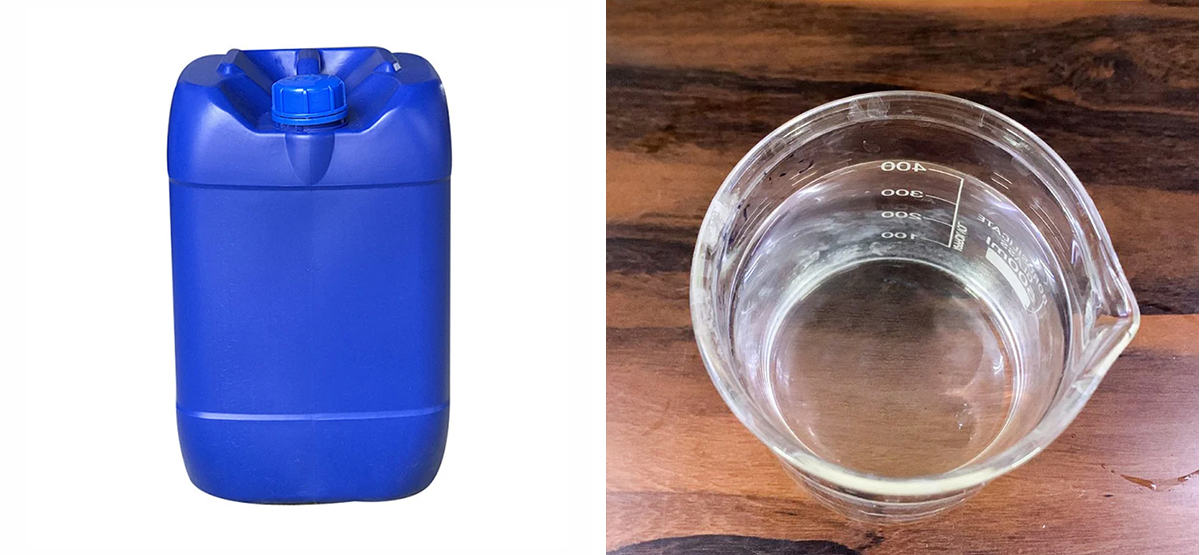
As a frequently encountered inorganic acid, phosphoric acid exhibits moderate strength - less acidic than potent acids like sulfuric, hydrochloric or nitric acid, yet stronger than milder acids including acetic, boric and carbonic acids. Interaction with sodium carbonate at varying pH levels yields different acidic salts. The substance may provoke skin irritation, induce inflammation, and harm bodily tissues. When heated in porcelain vessels, concentrated phosphoric acid displays corrosive properties. Due to its moisture-absorbing nature, storage in airtight containers is essential. The commercially supplied product typically consists of a thick solution comprising 82% H3PO4, with its notable viscosity attributable to hydrogen bonding within the solution.

Melting point | ~40 °C(lit.) |
Boiling point | 158 °C(lit.) |
density | 1.685 g/mL at 25 °C(lit.) |
vapor density | 3.4 (vs air) |
vapor pressure | 2.2 mm Hg ( 20 °C) |
refractive index | n20/D 1.433 |
FEMA | 2900 | PHOSPHORIC ACID |
storage temp. | no restrictions. |
solubility | H2O: soluble |
pka | 2.1-7.2-12.3(at 25℃) |
form | Solid or Viscous Liquid |
Specific Gravity | 1.7 |
color | ≤10(APHA) |
PH | 3.06(1 mM solution);2.26(10 mM solution);1.63(100 mM solution); |
Odor | Odorless |
PH Range | 1.5 |
biological source | synthetic |
Water Solubility | MISCIBLE |
λmax | λ: 260 nm Amax: ≤0.05 |
Merck | 14,7344 |
BRN | 1921286 |
Exposure limits | TLV-TWA 1 mg/m3 (ACGIH, MSHA, and OSHA); TLV-STEL 3 mg/m3 (ACGIH). |
Dielectric constant | 61.0 |
InChIKey | NBIIXXVUZAFLBC-UHFFFAOYSA-N |
LogP | -2.15 |
CAS DataBase Reference | 7664-38-2(CAS DataBase Reference) |
NIST Chemistry Reference | Phosphoric acid(7664-38-2) |
EPA Substance Registry System | Phosphoric acid (7664-38-2) |
Safety Information
Hazard Codes | C,Xn,T,F |
Risk Statements | 34-35-22-39/23/24/25-36/38-23/24/25-11 |
Safety Statements | 7-16-26-36/37-45-36/37/39-1/2-24/25 |
RIDADR | UN 3453 8/PG 3 |
OEB | C |
OEL | TWA: 1 mg/m3, STEL: 3 mg/m3 |
WGK Germany | 3 |
RTECS | TB6300000 |
F | 3-10 |
TSCA | Yes |
HS Code | 2809 20 00 |
HazardClass | 8 |
PackingGroup | III |
Hazardous Substances Data | 7664-38-2(Hazardous Substances Data) |
Toxicity | ADI 0 to 70 mg / kg (total phosphate content in terms of phosphorus, FAO / WHO, 2001). |
IDLA | 1,000 mg/m3 |


![Imidazo[1,2-b]pyridazine CAS#766-55-2](https://cdn.whchemicalsd.com/cdn/ff/Mkl41MvMW9PXf8pwDpcoYmKXr5dElhJYOWzczPkAOF0/1779069853/public/styles/chanp/public/2026-05/zt%20%2817%29%20-%20%E5%89%AF%E6%9C%AC.jpg?itok=bZg159zV)