
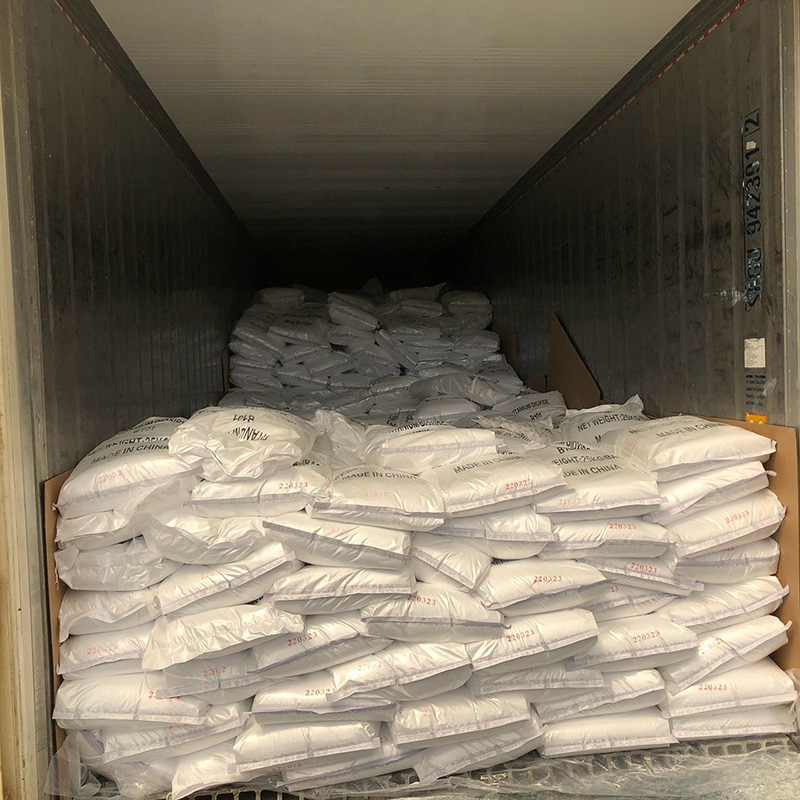
1,2,3-1H-Triazole CAS#288-36-8
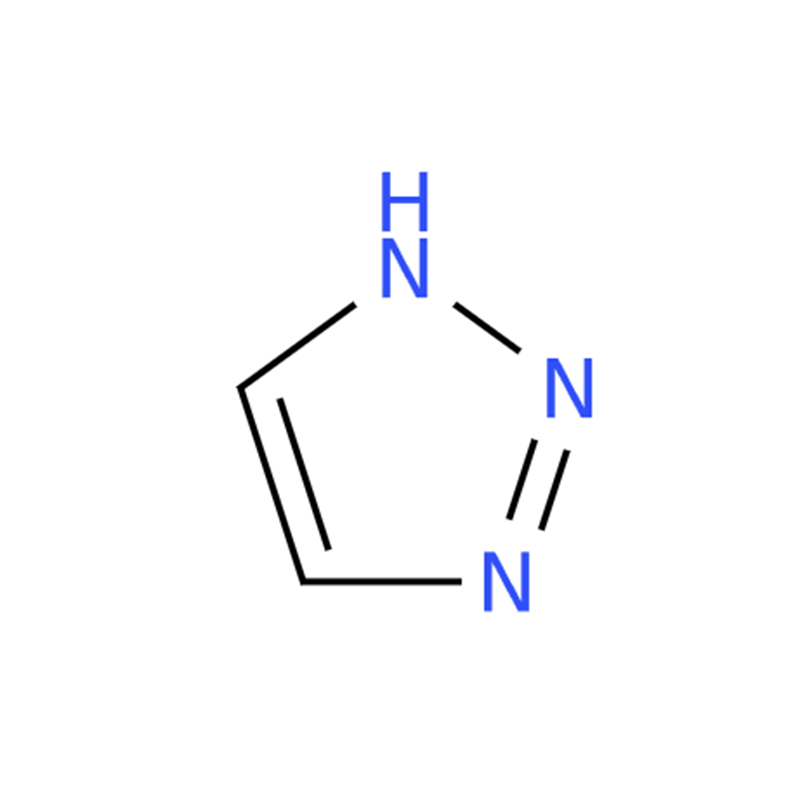
Aromatic Heterocyclic Structure: Features a stable five-membered aromatic heterocyclic structure with the molecular formula C₂H₃N₃.
Low Melting Point: Has a melting point of 23–25 °C, allowing it to exist as a low-melting solid or liquid under typical conditions.
High Boiling Point: Exhibits a boiling point of approximately 203 °C, providing good thermal stability under elevated temperatures.
Good Solubility in Organic Solvents: Soluble in acetone and chloroform, with limited solubility in methanol, offering flexibility in solvent-based applications.
Products Description of 1,2,3-1H-Triazole CAS#288-36-8
1,2,3-1H-Triazole (CAS No.: 288-36-8) is a five-membered aromatic heterocyclic compound with the chemical formula C₂H₃N₃ and a molecular weight of 69.07 g/mol. It is typically found as a colorless to pale yellow liquid or a solid with a low melting point of approximately 23–25 °C. It has a melting point ranging from 23 to 25 °C (73–77 °F; 296–298 K) and a boiling point of around 203 °C (397 °F; 476 K). The compound is soluble in acetone and chloroform, while exhibiting limited solubility in methanol.
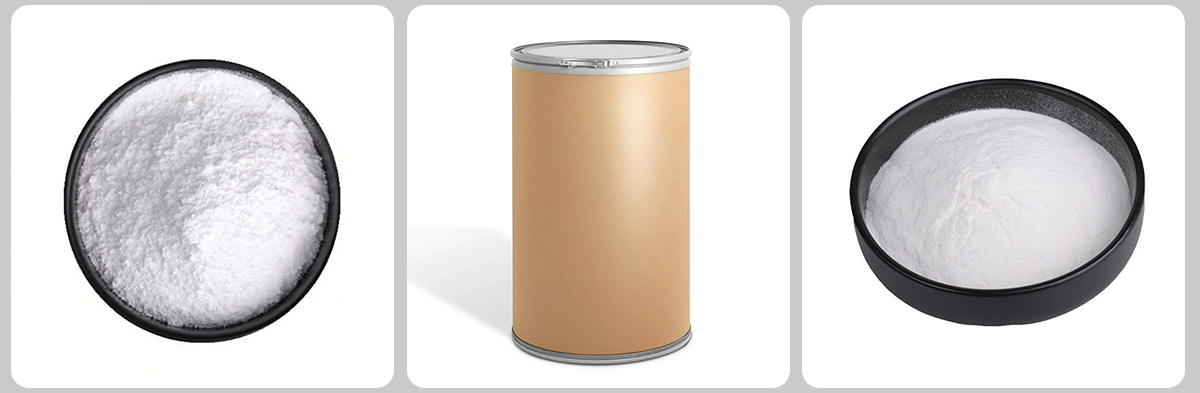
1,2,3-1H-Triazole Chemical Properties
| Melting point | 23-25 °C(lit.) |
| Boiling point | 203 °C752 mm Hg(lit.) |
| density | 1.192 g/mL at 25 °C(lit.) |
| refractive index | n20/D 1.498(lit.) |
| Fp | 225 °F |
| storage temp. | Sealed in dry,Room Temperature |
| solubility | Acetone, Chloroform, Methanol (Slightly) |
| form | Liquid |
| pka | 1.17(at 20℃) |
| color | Clear colorless to yellow |
| Specific Gravity | 1.192 |
| Water Solubility | soluble |
| FreezingPoint | 21.0 to 24.0 ℃ |
| BRN | 104766 |
| InChIKey | QWENRTYMTSOGBR-UHFFFAOYSA-N |
| CAS DataBase Reference | 288-36-8(CAS DataBase Reference) |
| NIST Chemistry Reference | 1H-1,2,3-Triazole(288-36-8) |
| Hazard Codes | Xi,Xn |
| Risk Statements | 36/37/38-63-36-22 |
| Safety Statements | 37/39-26-36/37 |
| WGK Germany | 3 |
| Hazard Note | Irritant |
| HS Code | 29339900 |

Applications
Organic Synthesis & Building Blocks: Serves as a valuable intermediate in medicinal chemistry and agrochemical research, where it can act as a bioisosteric replacement for other functional groups.
Coordination Chemistry: Can be used as a ligand in the development of metal-organic frameworks (MOFs) and crystalline framework materials for sensing and catalytic applications.
Materials Science: Helps enhance proton conductivity in polymer electrolyte membranes.