Products Description of Sodium Dichloroisocyanurate CAS#2893-78-9
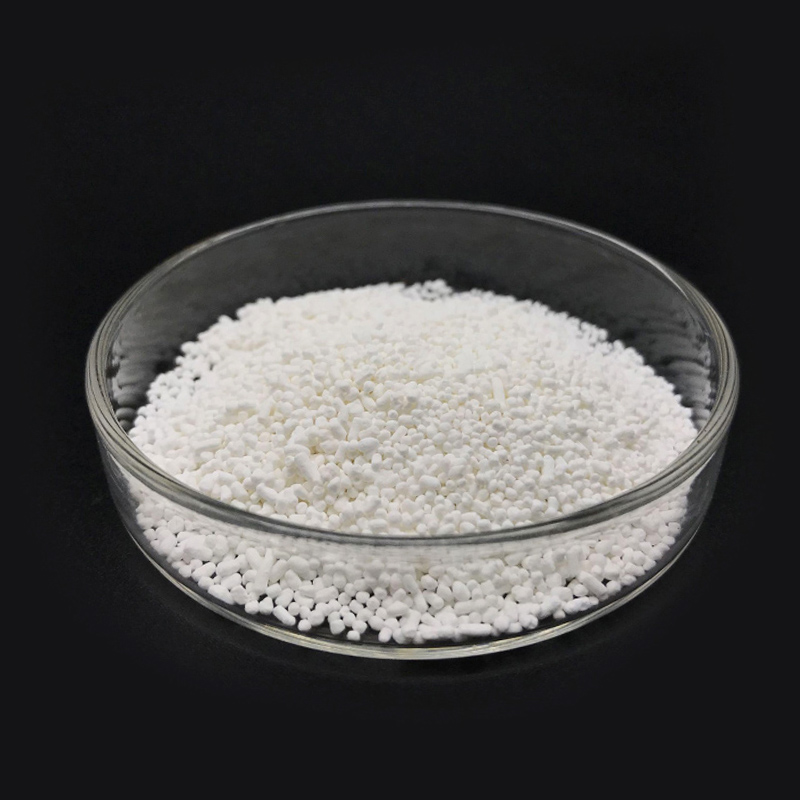
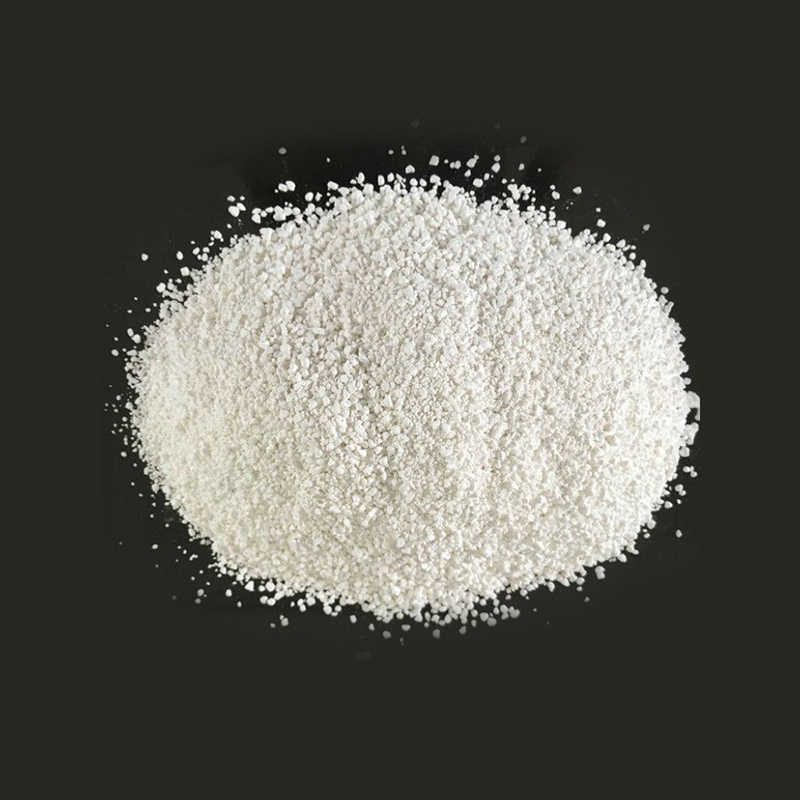
Sodium dichloroisocyanurate is a white crystalline powder with a strong chlorine odor and an available chlorine content of 60%–64.5%. It has good stability, with the available chlorine content decreasing by only approximately 1% when stored under hot and humid conditions.
Sodium dichloroisocyanurate is readily soluble in water, with a solubility of approximately 25% at 25°C. Its aqueous solution is weakly acidic, with a pH of 5.8–6.0 for a 1% solution. The pH changes only slightly as the concentration increases. When dissolved in water, it produces hypochlorous acid, with a hydrolysis constant of 1 × 10⁻⁴, which is higher than that of chloramine-T.
Although the aqueous solution has relatively poor stability and its available chlorine loss is accelerated by ultraviolet radiation, sodium dichloroisocyanurate exhibits strong disinfecting properties. Even at low concentrations, it can rapidly eliminate various bacterial propagules, fungi, and viruses, and is particularly effective against hepatitis viruses.
Sodium dichloroisocyanurate is characterized by its high available chlorine content, strong bactericidal effect, simple production process, and low cost. It has low toxicity and provides stronger bactericidal performance than bleaching powder and chloramine-T.
Chlorine fumigants or acid chlorine fumigants can also be prepared by mixing sodium dichloroisocyanurate dry powder with metal reducing agents or acid synergists and potassium permanganate. When ignited, these fumigants generate gases with strong bactericidal effects.
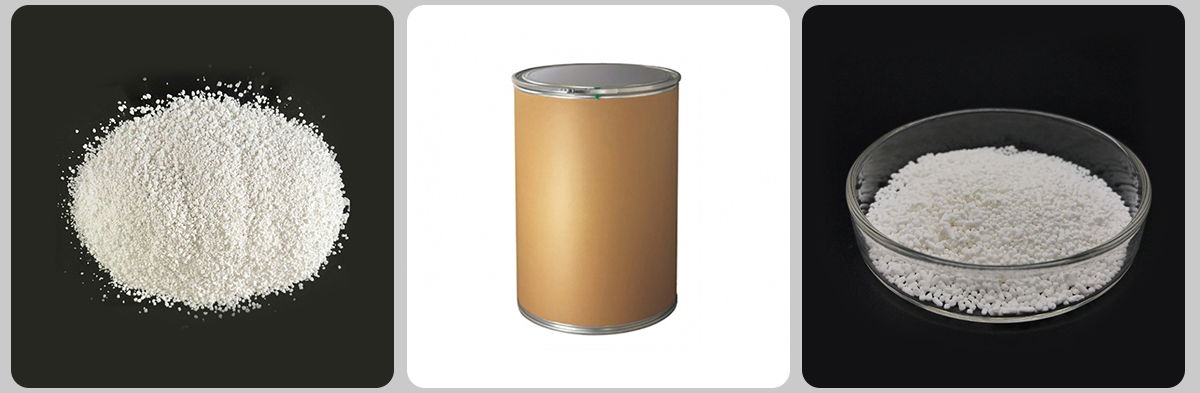
Sodium dichloroisocyanurate Chemical Properties
| Melting point | 225°C |
| density | 1 g/cm3 |
| vapor pressure | 0.006Pa at 20℃ |
| storage temp | 0-6°C |
| solubility | DMSO (Slightly, Heated), Methanol (Slightly, Heated, Sonicated), Water |
| form | powder to lump |
| color | White to Almost white |
| Water Solubility | 30g/100ml (25 ºC) |
| Sensitive | Moisture Sensitive |
| BRN | 4056155 |
| Stability | Stable. Oxidizing agent - contact with combustible material may lead to fire. Incompatible with strong bases, strong oxidizing agents. Reacts readily with many nitrogen-containing compounds to form explosive nitrogen triiodide. Moisture-sensitive. |
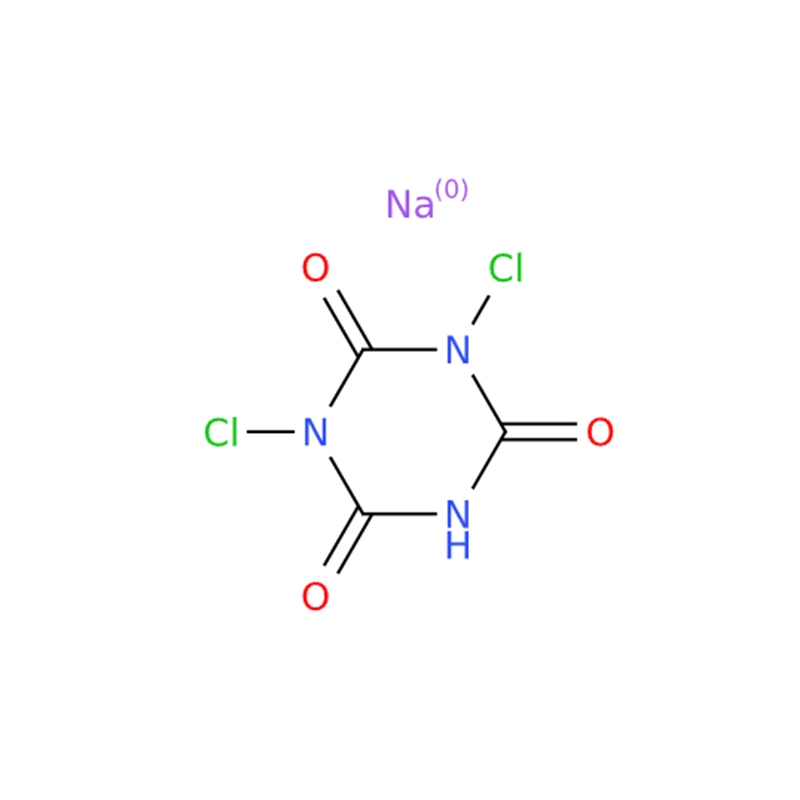
| InChI | InChI=1S/C3HCl2N3O3.Na/c4-7-1(9)6-2(10)8(5)3(7)11;/h(H,6,9,10);/q;+1/p-1 |
| InChIKey | MSFGZHUJTJBYFA-UHFFFAOYSA-M |
| SMILES | C1(=O)N(Cl)C(=NC(=O)N1Cl)[O-].[Na+] |
| EPA Substance Registry System | Sodium dichloro-s-triazinetrione (2893-78-9) |
| Hazard Codes | O,Xn,N,E |
| Risk Statements | 8-22-31-36/37-50/53-2 |
| Safety Statements | 8-26-41-60-61-45 |
| RIDADR | UN 2465 5.1/PG 2 |
| WGK Germany | 2 |
| RTECS | XZ1900000 |
| TSCA | Yes |
| HazardClass | 5.1 |
| PackingGroup | II |
| HS Code | 29336929 |
| Hazardous Substances Data | 2893-78-9(Hazardous Substances Data) |

Product Application of Sodium Dichloroisocyanurate CAS#2893-78-9
Sodium dichloroisocyanurate is widely used for drinking water and tableware disinfection. It can also be used to disinfect the surfaces of fruits and eggs, helping extend their shelf life.
It is widely applied in large-scale disinfection efforts for flood control and disaster relief, as well as for preventive disinfection in areas affected by epidemic infectious diseases.
In sericulture, sodium dichloroisocyanurate can be used in the form of fumigation, aqueous solutions, or powder to disinfect silkworm rearing rooms, silkworm-rearing equipment, and silkworm bodies.
It can also be used to prevent and control fish diseases caused by bacteria, fungi, and algae, and has demonstrated notable effects against viral diseases in fish.
In addition, a 2%–3% chloramine aqueous solution combined with other auxiliaries can be used to treat wool or wool-blended fibers and fabrics by soaking. This treatment helps prevent pilling and shrinkage of wool and wool products, enabling them to meet the superwash standards established by the International Wool Bureau.