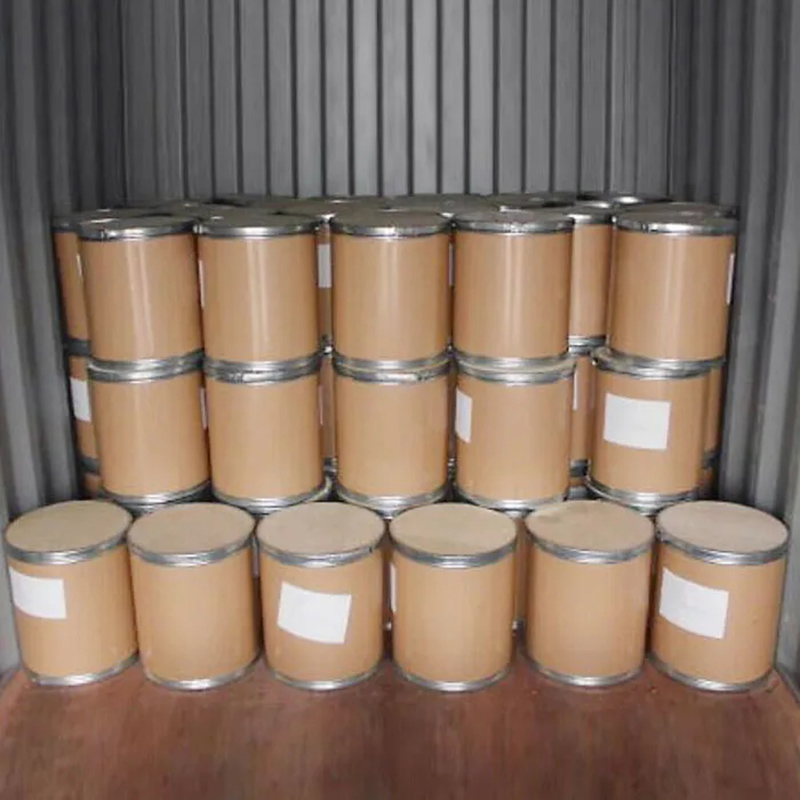
Ammonium thiosulfate CAS#7783-18-8
High Water Solubility – Ammonium thiosulfate is readily soluble in water, making it suitable for aqueous formulations and processing.
Excellent Silver Halide Dissolving Ability – Its aqueous solution can dissolve silver halides, with greater solubility for silver chloride and silver bromide than sodium thiosulfate.
Fast Fixing Performance – Due to its strong ability to dissolve silver halides, ammonium thiosulfate is widely used as a fast-fixing agent in photographic processing.
Defined Physical Properties – Ammonium thiosulfate has a molecular weight of 148.20, a melting point of 150°C (decomposition), and a relative density of 1.679, providing well-defined characteristics for industrial use.
Products Description of Ammonium Thiosulfate CAS#7783-18-8
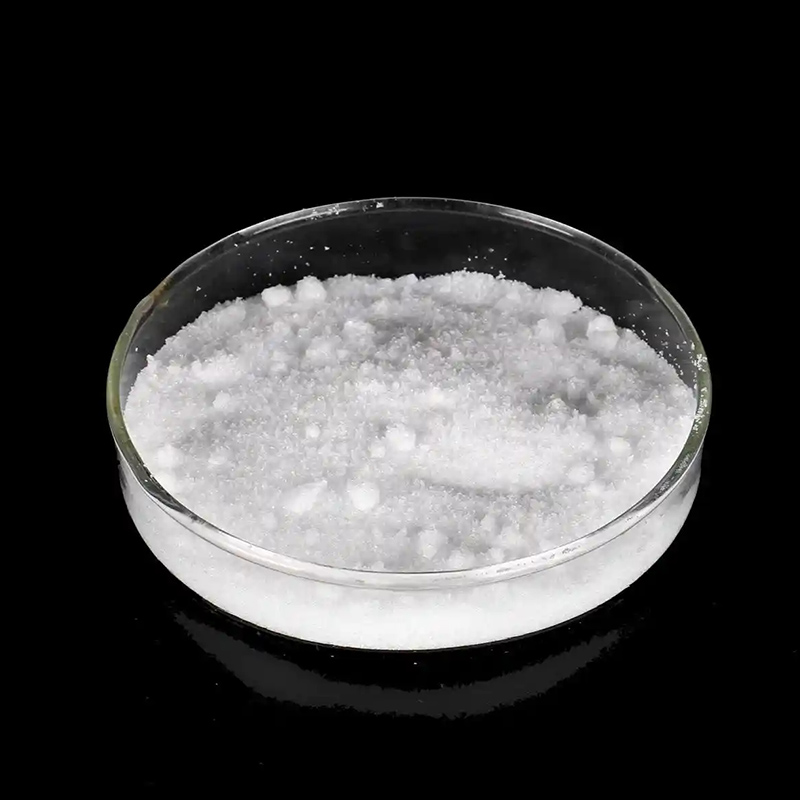
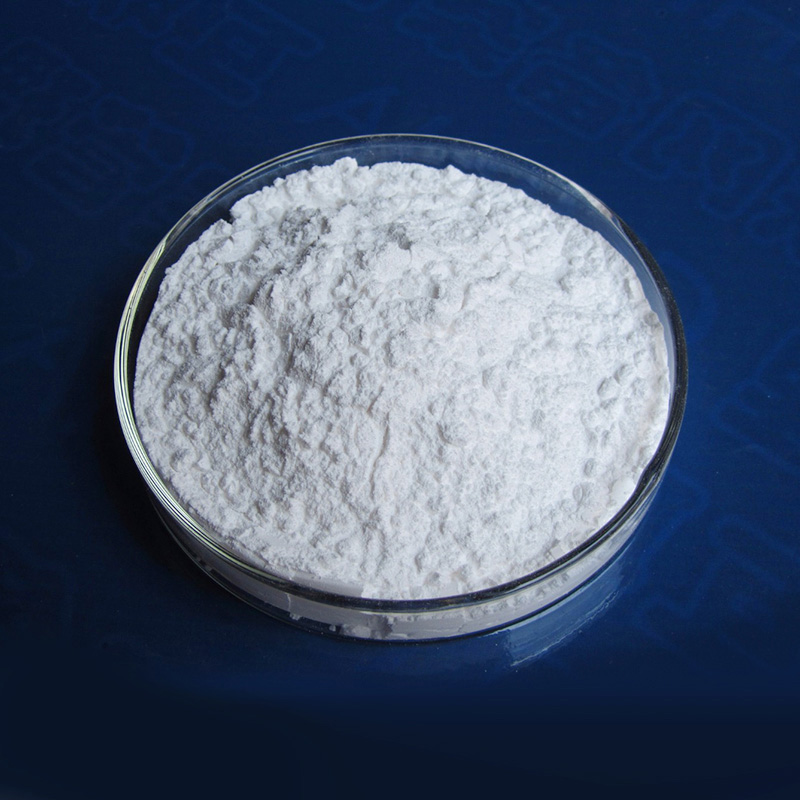
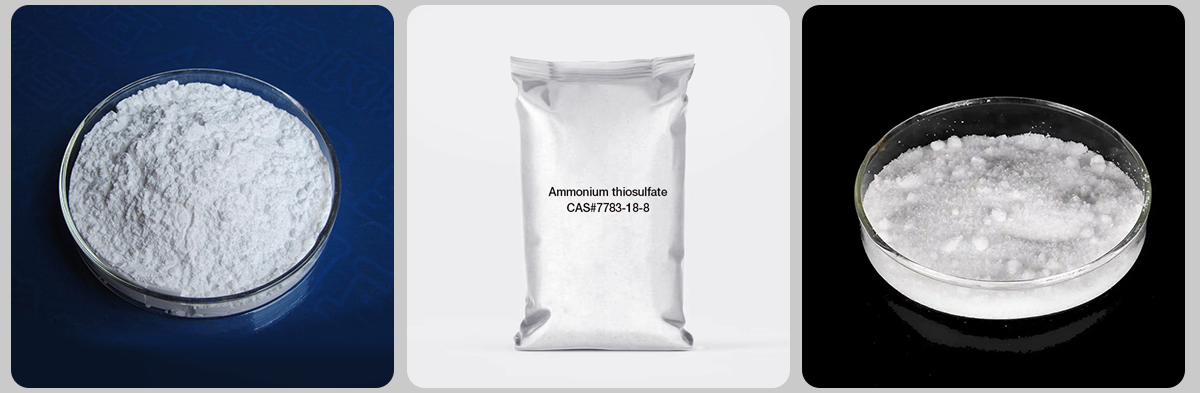
Ammonium thiosulfate has the chemical formula (NH₄)₂S₂O₃ and a molecular weight of 148.20. It appears as colorless monoclinic crystals, with a melting point of 150°C (decomposition) and a relative density of 1.679.
Ammonium thiosulfate is readily soluble in water, insoluble in ethanol, and slightly soluble in acetone. Its aqueous solution may precipitate sulfur when left standing for an extended period. Above 50°C, a concentrated aqueous solution gradually decomposes into sulfur and sulfate. In the presence of ammonia and hydrocyanic acid, it can form ammonium thiocyanate and ammonium sulfite.
The aqueous solution of ammonium thiosulfate can dissolve silver halides. Its solubility for silver chloride and silver bromide is greater than that of sodium thiosulfate, making it suitable for fast fixing applications. However, it also has a dissolving effect on the metallic silver that forms the image.
Ammonium thiosulfate can be prepared by adding excess ammonium carbonate to an aqueous solution of calcium thiosulfate. It can also be produced by reacting aqueous solutions of ammonium bisulfide and ammonium bisulfite at an accurate molar ratio of 1:2. Another preparation method involves removing sulfur through the double decomposition reaction of ammonium sulfite and ammonium polysulfide, followed by freezing and crystallization.
Ammonium thiosulfate Chemical Properties
| Melting point | 150 °C (lit.) |
| density | 1.679 g/mL at 25 °C (lit.) |
| solubility | H2O: very soluble(lit.) |
| form | Crystalline Powder |
| color | White |
| Odor | Ammonical odour |
| Water Solubility | Soluble in water, slightly soluble in acetone. Insoluble in ethanol and diethyl ether. |
| Sensitive | Hygroscopic |
| Merck | 14562 |
| Stability: | Stable. Hygroscopic. |
| InChI | InChI=1S/2H3N.H2O3S2/c;;1-5(2,3)4/h2*1H3;(H2,1,2,3,4) |
| InChIKey | XYXNTHIYBIDHGM-UHFFFAOYSA-N |
| SMILES | S(=S)(=O)(O)O.N.N |
| LogP | -0.428 (est) |
| CAS DataBase Reference | 7783-18-8(CAS DataBase Reference) |
| EPA Substance Registry System | Ammonium thiosulfate (7783-18-8) |
| Risk Statements | 33-36/37/38 |
| Safety Statements | 26-37 |
| WGK Germany | 1 |
| RTECS | XN6465000 |
| TSCA | Yes |
| HS Code | 28323000 |
| Hazardous Substances Data | 7783-18-8(Hazardous Substances Data) |
| Toxicity | LD50 orl-rat: 2890 mg/kg GTPZAB 26(6),54,82 |

Product Application of Ammonium Thiosulfate CAS#7783-18-8
Ammonium thiosulfate is commonly used as a photographic fixer, metal cleaning agent, electroplating solution, and reducing agent.
Agricultural Applications:
In agriculture, ammonium thiosulfate is used to synthesize the tert-butyl isothiocyanate intermediate of the insecticide buprofezin, as well as the thiosemicarbazide intermediates of the insecticide pyraclostrobin, the fungicide chlorfenapyr, and the herbicide flufenacet. It is also used as an auxiliary raw material and dye in the manufacture of hydrogen peroxide and as a polymerization catalyst for organic synthesis.
Photographic Applications:
In the photosensitive industry, ammonium thiosulfate is used as a photographic fixer. It dissolves silver halide emulsions more readily than sodium salts, offering the advantages of shorter washing times and easier silver recovery.
Electroplating Applications:
Ammonium thiosulfate is used as a main component of silver plating baths and as a complexing agent in cyanide-free electroplating. Thiosulfate combines with silver ions to form silver thiosulfate complex ions, improving the cathodic polarization effect. This promotes the formation of fine silver plating crystals with good coverage. The typical dosage is 200–250 g/L.
Other Applications:
Ammonium thiosulfate is also used in the synthesis of organic boron compounds, plasticizers, and welding fluxes. In addition, it can be used in metal surface cleaning agents, aluminum-magnesium alloy casting protective agents, and as a bactericide and analytical reagent in the medical field.