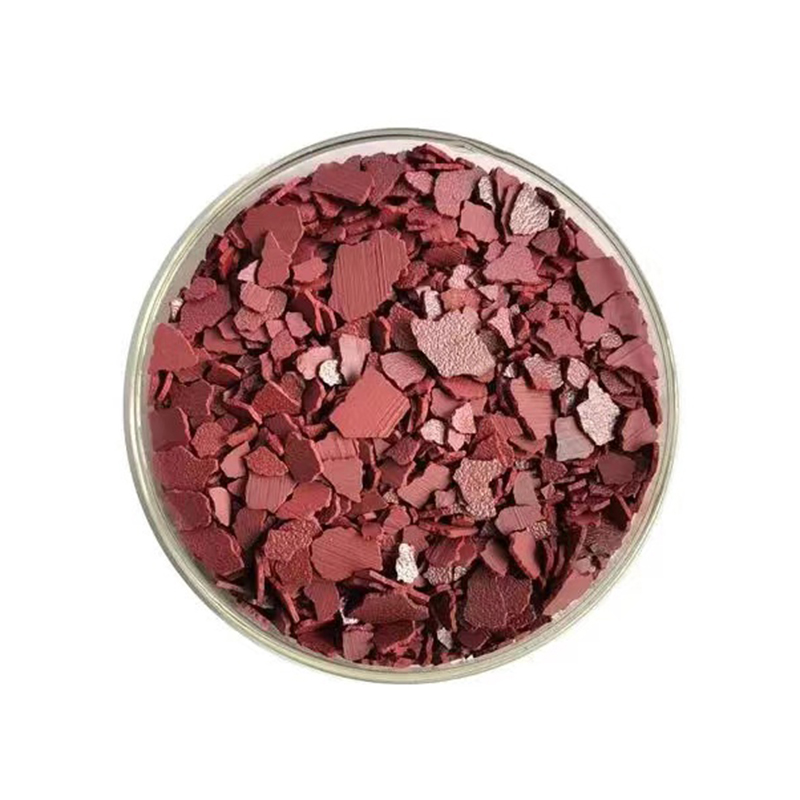
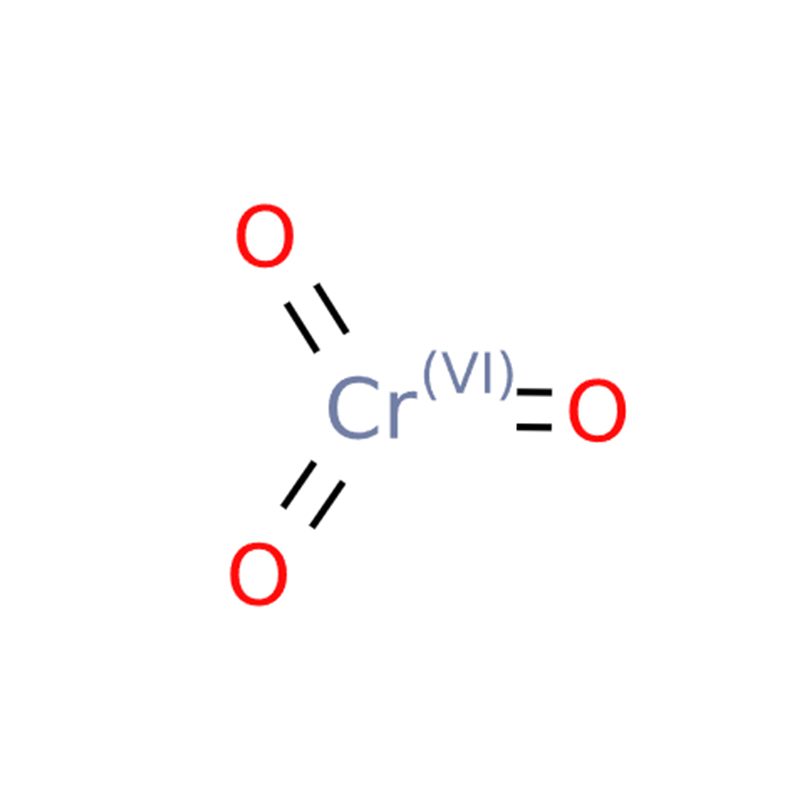
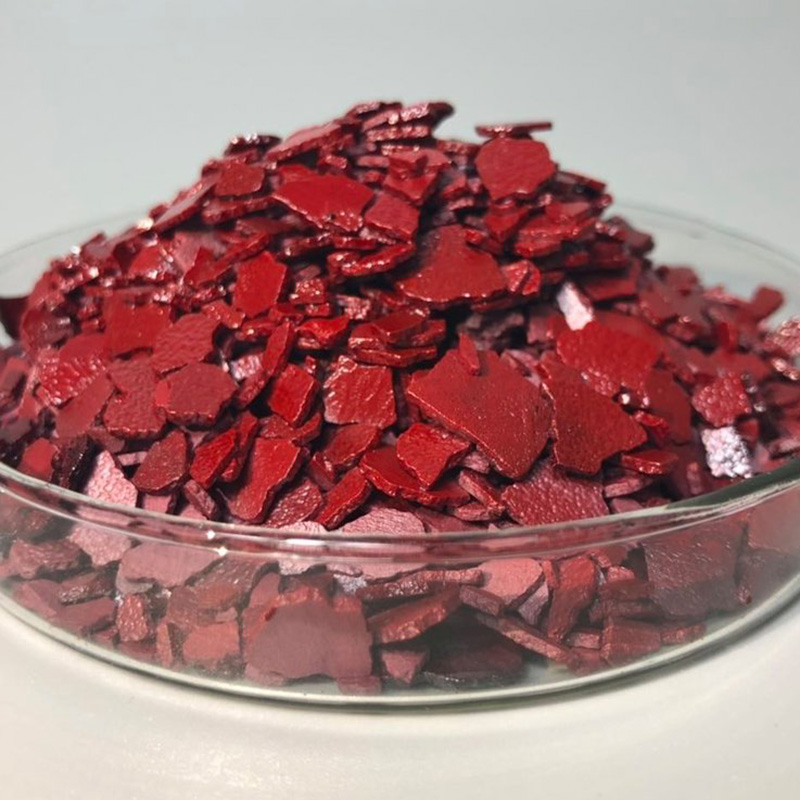
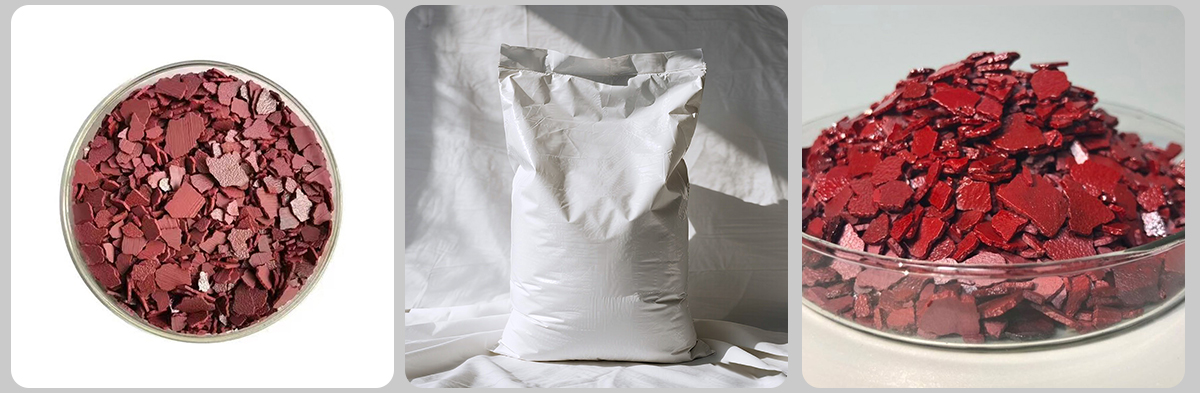
Chromium(VI) oxide Chemical Properties
| Melting point | 196 °C (dec.)(lit.) |
| Boiling point | 330 °C |
| density | 2.7 |
| vapor pressure | 0Pa at 25℃ |
| Fp | 250°C |
| storage temp. | Store below +30°C. |
| solubility | 1.667g/l |
| form | macroporous |
| pka | -0.61[at 20 ℃] |
| color | Reddish-violet |
| Specific Gravity | 2.7 |
| PH | <1 (100g/l, H2O, 20℃) |
| Water Solubility | Highly soluble |
| FreezingPoint | 170~172℃ |
| Sensitive | Hygroscopic |
| Merck | 142235 |
| Exposure limits | ACGIH: TWA 0.0002 mg/m3; STEL 0.0005 mg/m3 (Skin) |
| OSHA: Ceiling 0.1 mg/m3 | |
| NIOSH: IDLH 15 mg/m3; TWA 0.0002 mg/m3 | |
| Stability: | Stable. Strong oxidizer. Reacts with most organic material in a violent and often explosive fashion. Moisture sensitive. |
| InChIKey | WGLPBDUCMAPZCE-UHFFFAOYSA-N |
| CAS DataBase Reference | 1333-82-0(CAS DataBase Reference) |
| NIST Chemistry Reference | Chromium trioxide(1333-82-0) |
| EPA Substance Registry System | Chromium(VI) trioxide (1333-82-0) |
| Hazard Codes | O,T+,N,T |
| Risk Statements | 45-46-9-24/25-26-35-42/43-48/23-50/53-62-8 |
| Safety Statements | 53-45-60-61-36/37/39-28-26-22 |
| RIDADR | UN 1463 5.1/PG 2 |
| WGK Germany | 3 |
| RTECS | GB6650000 |
| TSCA | Yes |
| HazardClass | 5.1 |
| PackingGroup | II |
| HS Code | 28191000 |
| Hazardous Substances Data | 1333-82-0(Hazardous Substances Data) |
| Toxicity | LD50 oral (rat) 80 mg/kg |
| PEL (OSHA) 0.1 mg (CrO3)/m3 (ceiling) | |
| TLV-TWA (ACGIH) 0.05 mg (Cr)/m3 | |
| IDLA | 15 mg Cr(VI)/m3 |

Product Application of Chromium(VI) Oxide CAS#1333-82-0
Chromium trioxide is widely used in the electroplating industry as an essential raw material for chromium plating applications on products such as bicycles, sewing machines, watches, instruments, flashlights, and various hardware items. It is also utilized in the production of high-purity metallic chromium.
Additionally, chromium trioxide serves as a key raw material for manufacturing chromium oxide green and zinc chrome yellow pigments, as well as for producing low-temperature shift catalysts, high-temperature shift catalysts, and high-pressure methanol synthesis catalysts. It is applied as a mordant in wool fabric dyeing and functions as an oxidizing agent in the printing and dyeing industry. Moreover, it can be used for wood preservation and antiseptic treatment.