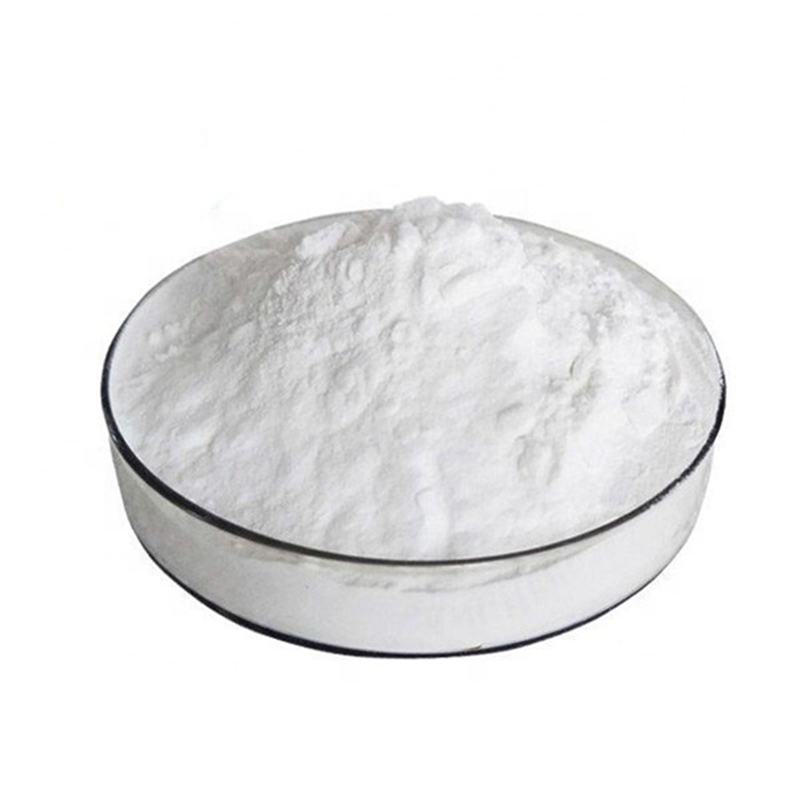
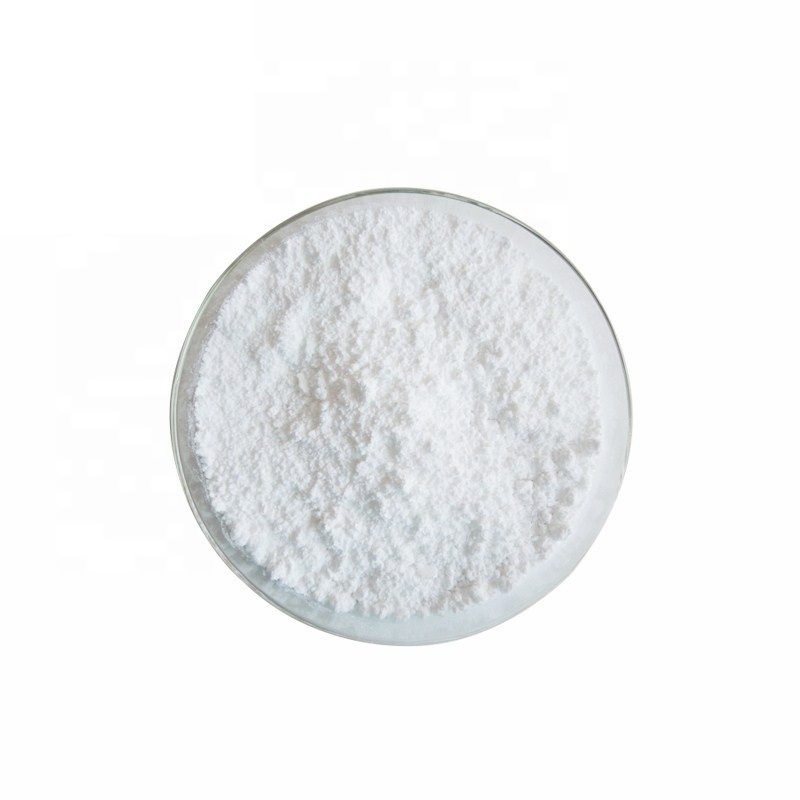
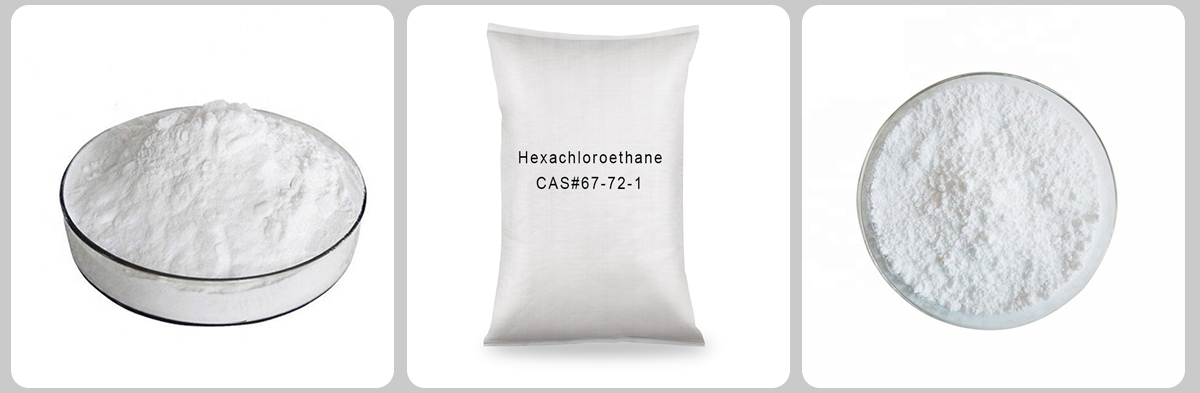
Hexachloroethane CAS#67-72-1
Distinctive Crystal Structure: Forms white, needle-shaped orthorhombic crystals when crystallized from ethanol or diethyl ether.
Excellent Sublimation Properties: Exhibits sublimation characteristics, transitioning directly from solid to vapor at approximately 186.8°C without melting.
Broad Organic Solvent Compatibility: Nearly insoluble in water but soluble in various organic solvents, including ethanol, diethyl ether, benzene, chloroform, and oils.
High Chemical Reactivity: Reacts vigorously with metallic zinc in alcoholic solutions to produce zinc chloride and tetrachloroethylene, and can also react with various other metal powders.
Products Description of Hexachloroethane CAS#67-72-1
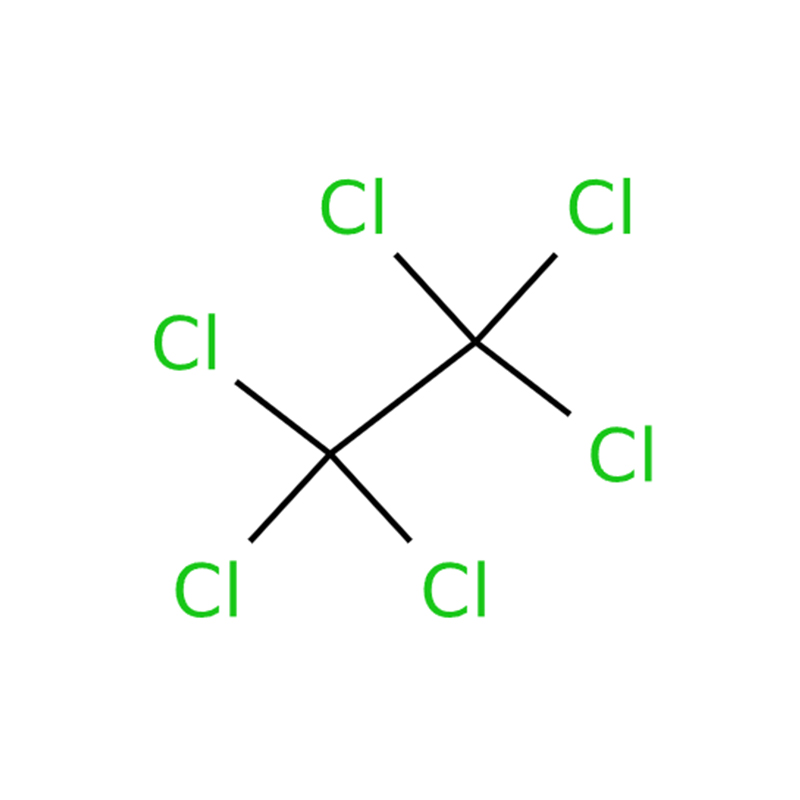
Hexachloroethane, also referred to as perchloroethane or carbon hexachloride, has the chemical formula Cl₃CCCl₃. When crystallized from ethanol or diethyl ether, it forms white, needle-shaped orthorhombic crystals. This compound has a camphor-like odor and is characterized by its ability to sublime. Its relative molecular mass is 236.76, and its relative density is 2.091. Hexachloroethane has a melting point of 185.0°C and a boiling point (triple point) of 186.8°C, at which it undergoes sublimation without passing through the liquid state.
Hexachloroethane is almost insoluble in water but dissolves in organic solvents such as ethanol, diethyl ether, benzene, and chloroform, as well as in oils. It reacts vigorously with metallic zinc in an alcoholic solution, producing zinc chloride and tetrachloroethylene. It can also react with various other metal powders.
Hexachloroethane Chemical Properties
| Melting point | 183-185 °C (dec.) (lit.) |
| Boiling point | 186℃ |
| density | 2.091 g/mL at 25 °C (lit.) |
| vapor density | 8.16 (vs air) |
| vapor pressure | 0.4 mm Hg ( 20 °C) |
| refractive index | 1.5282 (estimate) |
| Fp | 9℃ |
| storage temp. | 2-8°C |
| solubility | Soluble in alcohol, benzene, chloroform, ether |
| form | Crystals or Crystalline Powder |
| color | White |
| Water Solubility | 0.05 g/L (22 ºC) |
| Merck | 144679 |
| BRN | 1740341 |
| Henry's Law Constant | 1.43, 2.81, and 5.31 at 10, 20, and 30 °C, respectively (Munz and Roberts, 1987) |
| Exposure limits | TLV-TWA 10 ppm (~100 mg/m3) (ACGIH), 1 ppm (MSHA and OSHA), Lowest Feasi ble Limit (NIOSH); carcinogenicity: Animal Limited Evidence (IARC). |
| Stability: | Stable. Non-combustible. May react with hot metals, strong oxidizing agents. |
| CAS DataBase Reference | 67-72-1(CAS DataBase Reference) |
| IARC | 2B (Vol. 73) 1999 |
| NIST Chemistry Reference | Ethane, hexachloro-(67-72-1) |
| EPA Substance Registry System | Hexachloroethane (67-72-1) |
| Hazard Codes | Xn,N,T,F |
| Risk Statements | 40-51/53-36/37/38-39/23/24/25-36/38-23/24/25-11-50/53-52/53 |
| Safety Statements | 36/37-61-45-36/37/39-26-24-16-7-37/39 |
| RIDADR | UN 9037 |
| OEB | B |
| OEL | TWA: 1 ppm (10 mg/m3) [skin] (Chloroethanes) |
| WGK Germany | 3 |
| RTECS | KI4025000 |
| TSCA | Yes |
| HazardClass | 9 |
| PackingGroup | III |
| HS Code | 29031990 |
| Hazardous Substances Data | 67-72-1(Hazardous Substances Data) |
| Toxicity | MLD i.v. in dogs: 325 mg/kg (Barsoum, Saad) |
| IDLA | 300 ppm |

Product Application of Hexachloroethane CAS#67-72-1
Hexachloroethane is used as a solvent and as a raw material or intermediate in the production of Freon-113, pesticides, pharmaceuticals, veterinary medicines, smoke-generating agents, defoamers, degassing agents for aluminum products, deoxidizers for aluminum, magnesium, copper, and their alloys, cutting oil additives, polyvinyl chloride co-plasticizers, and other organic synthesis intermediates.
When blended in appropriate proportions with zinc powder, ammonium chloride, ammonium perchlorate, and similar materials, hexachloroethane can be used as a smoke-generating agent. It also serves as a substitute for camphor and as a rubber vulcanization accelerator.
In addition, hexachloroethane itself is used as a veterinary anthelmintic. Its primary applications include the treatment of liver fluke and stomach fluke infections in ruminants, as well as certain other trematode and nematode infections.