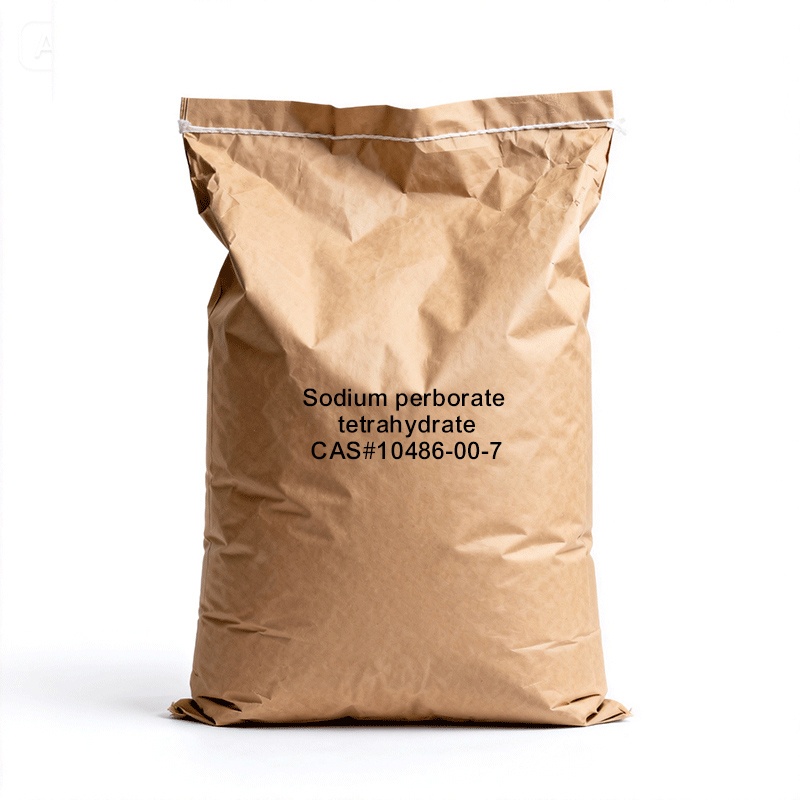
Sodium perborate tetrahydrateCAS#10486-00-7
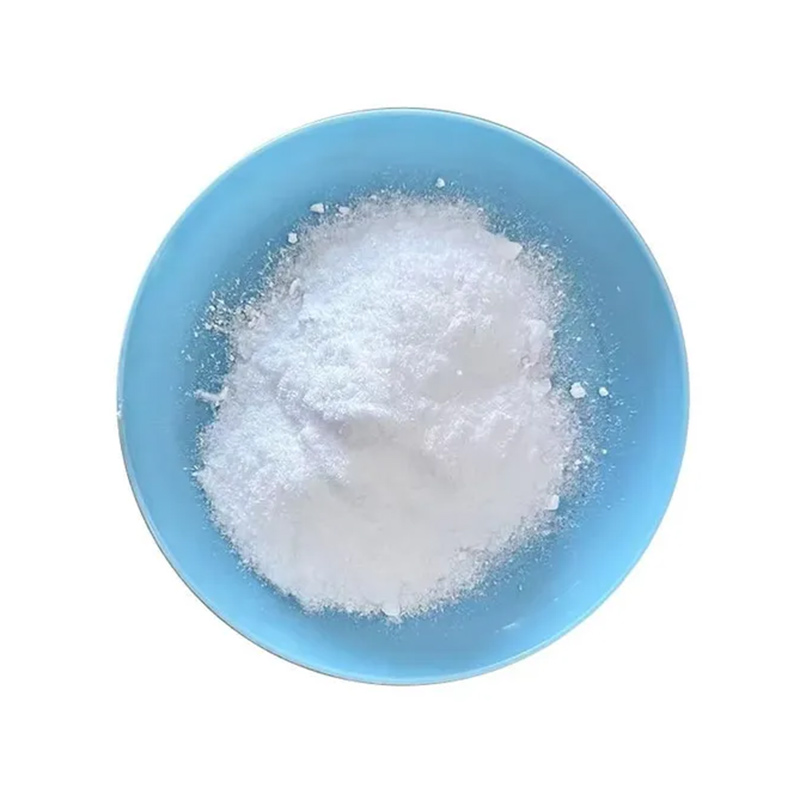
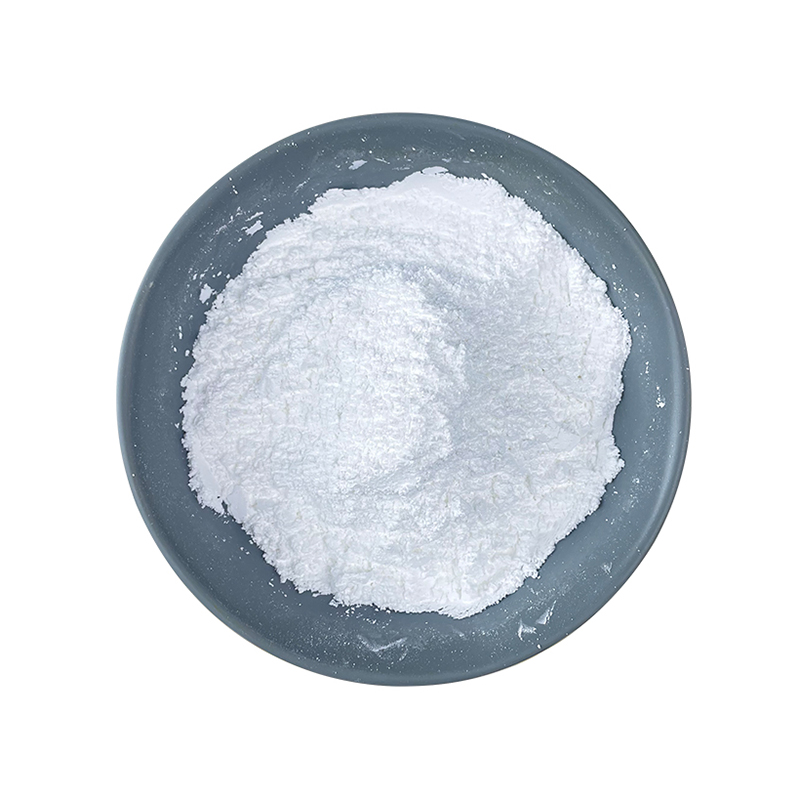
Distinct Crystalline Structure and Defined Melting Point – Sodium perborate appears as white monoclinic crystalline particles or powder and has a melting point of approximately 63°C.
Versatile Solubility – Sodium perborate is soluble in acids, alkalis, and glycerol, while being slightly soluble in water and forming an alkaline aqueous solution.
Active Oxygen Release – Sodium perborate readily releases active oxygen in aqueous solutions and can react with dilute acids to produce hydrogen peroxide, demonstrating useful oxidizing properties.
Multiple Decomposition and Oxidation Reactions – Sodium perborate undergoes controlled decomposition under specific temperature and chemical conditions, releasing oxygen or ozone and reacting with various oxidizing or catalytic substances.
Products Description of Sodium Perborate Tetrahydrate CAS#10486-00-7
Sodium perborate tetrahydrate is a white monoclinic crystalline material available in the form of particles or powder. It has a melting point of approximately 63°C and is soluble in acids, alkalis, and glycerol, while being slightly soluble in water. Its aqueous solution is alkaline, with a pH of approximately 10–11, but is unstable and readily releases active oxygen.
High-purity sodium perborate is relatively stable in cold, dry air. It decomposes at approximately 40°C or in humid air, releasing oxygen. At 63°C, it dissolves in its own crystal water and decomposes to form a sticky solid mass. Above 70°C, it loses three molecules of crystal water to form sodium perborate monohydrate.
Sodium perborate readily decomposes at high temperatures and in the presence of free alkalis. It reacts with dilute acids to produce hydrogen peroxide. When treated with concentrated sulfuric acid, it releases oxygen and ozone. It can also be readily decomposed by substances such as lead oxide, manganese dioxide, potassium permanganate, silver nitrate, copper oxide, cobalt oxide, and platinum black.
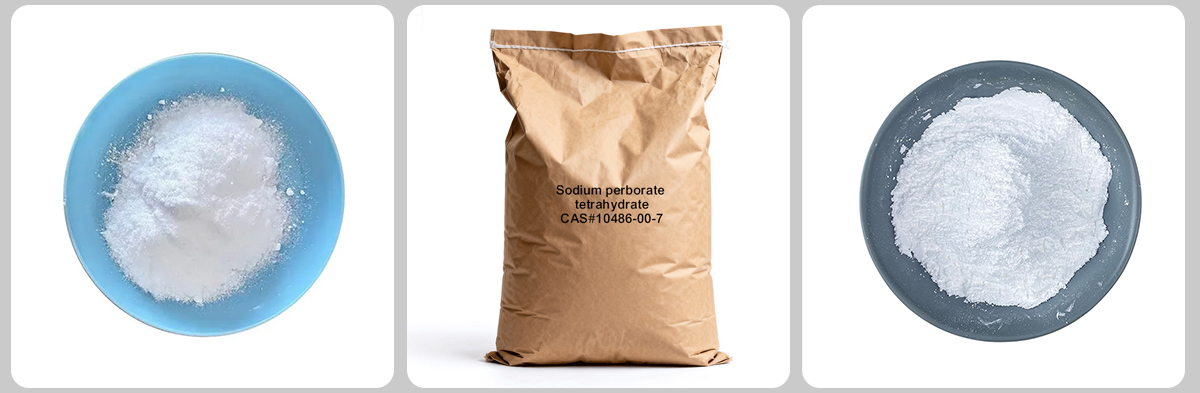
Sodium perborate tetrahydrate Chemical Properties
| Melting point | 60 °C (dec.)(lit.) |
| density | 1.73 |
| storage temp. | Store at +5°C to +30°C. |
| solubility | 23g/l |
| form | Crystalline Powder |
| color | White |
| Odor | Odorless |
| PH Range | 10 - 10.4 |
| PH | 10 (15g/l, H2O, 20℃) |
| Water Solubility | 21.5 g/L (18 ºC) |
| Sensitive | Hygroscopic |
| Merck | 148652 |
| Exposure limits | ACGIH: TWA 2 mg/m3; STEL 6 mg/m3 |
| Stability: | Stable. Incompatible with heavy metal salts, strong reducing agents, strong acids, organic material. May decompose in the presence of air and moisture. |
| CAS DataBase Reference | 10486-00-7(CAS DataBase Reference) |
| EPA Substance Registry System | Sodium perborate tetrahydrate (10486-00-7) |
| Hazard Codes | O,Xn,Xi,T |
| Risk Statements | 8-22-36-36/37/38-62-41-37-61 |
| Safety Statements | 17-26-36-37/39-45-53 |
| RIDADR | UN 1479 5.1/PG 2 |
| WGK Germany | 1 |
| RTECS | SC7350000 |
| TSCA | Yes |
| HazardClass | 5.1 |
| PackingGroup | III |
| HS Code | 28403000 |
Products Description of Sodium Perborate Tetrahydrate CAS#10486-00-7
Sodium perborate tetrahydrate is a white monoclinic crystalline material available in the form of particles or powder. It has a melting point of approximately 63°C and is soluble in acids, alkalis, and glycerol, while being slightly soluble in water. Its aqueous solution is alkaline, with a pH of approximately 10–11, but is unstable and readily releases active oxygen.
High-purity sodium perborate is relatively stable in cold, dry air. It decomposes at approximately 40°C or in humid air, releasing oxygen. At 63°C, it dissolves in its own crystal water and decomposes to form a sticky solid mass. Above 70°C, it loses three molecules of crystal water to form sodium perborate monohydrate.
Sodium perborate readily decomposes at high temperatures and in the presence of free alkalis. It reacts with dilute acids to produce hydrogen peroxide. When treated with concentrated sulfuric acid, it releases oxygen and ozone. It can also be readily decomposed by substances such as lead oxide, manganese dioxide, potassium permanganate, silver nitrate, copper oxide, cobalt oxide, and platinum black.